writing3 min read
Who Knows What to Ask the Data
AI can build any chart you describe in seconds. That makes the chart worthless and the question priceless. The scarce skill in data visualization is no longer drawing it. It is knowing what is worth drawing.
by faisal kurdi
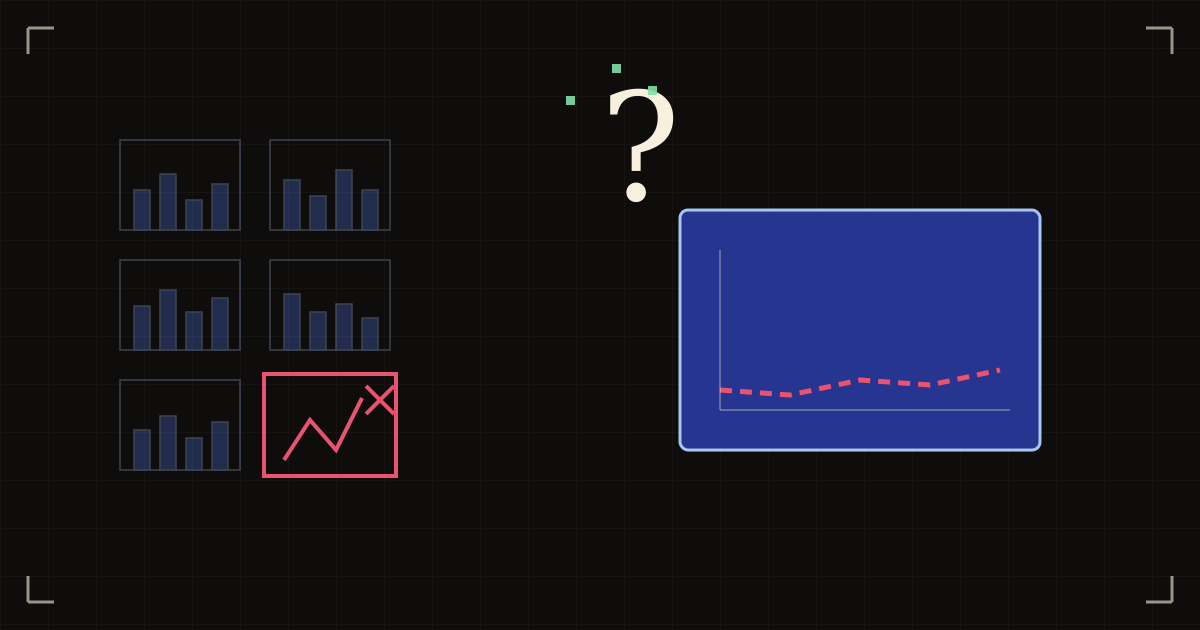
You can now describe a chart in plain language and have it appear in seconds, correct, formatted, ready for the deck. A model will join the tables, pick a sensible visualization, and label the axes without being asked twice. This is genuinely useful and it has quietly removed the part of data work that most people thought was the hard part. The drawing is solved. What it reveals is that the drawing was never where the insight came from, and the skill that actually matters has become both more scarce and more valuable.
I have watched analysts react to this in two ways. Some feel obsolete, because the mechanical thing they were good at is now free. The ones who thrive realized something else. When anyone can produce any chart instantly, the chart is worthless and the question behind it is everything. The expert is no longer the person who can make the visualization. It is the person who knows which visualization is worth making.
A chart answers a question you have to already hold
A visualization is an answer. It only means something against a question, and the question is the part the model cannot supply. Ask for revenue by month and you get a clean line that tells you almost nothing, because revenue by month is the obvious cut that everyone already stares at. The insight lives in the question nobody thought to ask. Revenue by month for the cohort that churned, against the cohort that stayed. The model will draw that beautifully too, the instant you know to want it, and knowing to want it is the entire job.
This is why handing a powerful charting tool to someone who does not know the domain produces a stack of correct, useless pictures. They can ask for anything, so they ask for the obvious, and the obvious is obvious precisely because everyone already knows it. The person who generates real insight is the one carrying a hypothesis worth testing, a sense of where the surprising thing might hide, and the judgment to know that the dip in March is a data quality problem rather than a business event. The tool draws what you ask. It cannot tell you that the answer it drew is a measurement artifact, and an expert can.
The model is confident about the wrong thing too
There is a sharper danger here that the speed makes worse. A model will produce a chart that is confidently misleading just as fast as one that is true. It will happily plot a correlation that is an artifact of how the data was collected, scale an axis in a way that turns noise into a trend, or aggregate across a group that should never have been combined. The chart looks authoritative because charts always look authoritative, and the person who asked for it has no way to know it is lying unless they understood the data well enough to be suspicious before they asked.
So the expert’s value shifts from production to interrogation. Not can you make this chart, but should I believe this chart, and what would have to be true for it to mean what it appears to mean. That is a harder skill than drawing, it takes longer to build, and it is exactly the skill that gets undervalued when the visible work, the chart appearing on screen, looks so effortless. The faster the tool, the more it rewards the person who can look at a clean, convincing visualization and ask the awkward question about how the data got there.
What this changes about who you need
The instinct, when charting becomes free, is to think you need fewer data people. I think it runs the other way for any organization that actually wants insight rather than decoration. You need fewer people to operate the tools and more people who understand the business and the data well enough to aim them. The headcount that used to go into building dashboards can go into the much rarer work of deciding what the dashboard should answer and whether its answers can be trusted.
This is the same pattern showing up across every field AI touches. The mechanical layer gets cheap and the judgment layer gets precious. In data visualization it is unusually stark, because the gap between a useless correct chart and a genuinely useful one is invisible to anyone without the domain knowledge to see it. The model closed the distance between a question and its picture to almost nothing. The distance between a dataset and a question worth asking is as long as it ever was, and that is where the expert now lives.
If you have invested in tools that can draw anything and you are still not getting insight out of your data, the missing piece is almost never another tool. It is someone who knows what to ask. That is the heart of what our data analysis work is really about, the question, not the chart.