writing3 min read
What AI Does to the PWA
Progressive web apps were built to feel fast, work offline, and live on the home screen without an app store. AI changes what a PWA can do inside those constraints, and the constraints are exactly why it gets interesting.
by faisal kurdi
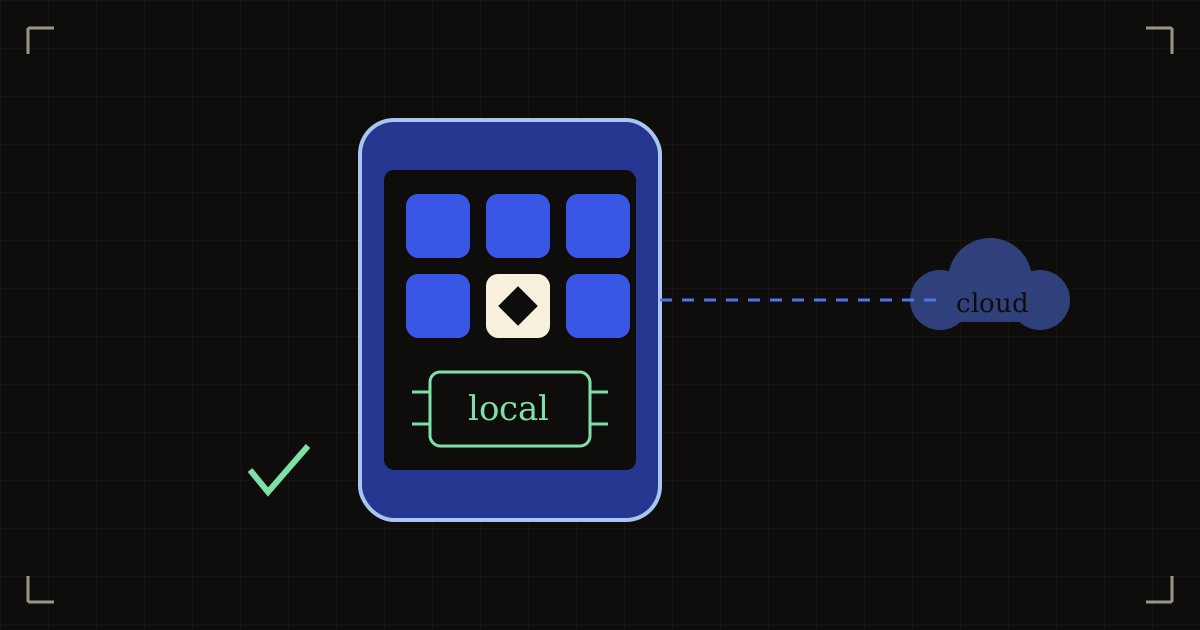
A progressive web app earns its keep by behaving like something it is not. It is a website, but it loads instantly, works without a connection, and sits on the home screen next to the native apps. We built our practice around that trick because for most businesses it delivers the reach of the web with the feel of an installed app and none of the app store tax. The question I keep getting now is what happens to that trick when you add AI, and the honest answer is that AI both extends the PWA and presses hard on the things that made it work.
Start with what gets better, because there is real upside and it is not the version the vendors are selling. The interesting AI in a PWA is not a chatbot bolted onto the corner. It is the model doing quiet work that used to require a round trip to a server and a person who knew what to type.
The model moves work to where the user already is
A PWA already keeps a lot of state on the device so it can run offline. That same local store is now a place where a small model can do useful things without asking the network for permission. Classifying a note the moment it is written. Suggesting the next field before the user reaches for it. Cleaning up a photo of a receipt before it ever leaves the phone. None of this needs a large model or a constant connection, and all of it lands inside the experience the PWA was already built to deliver, fast and local and available when the signal is not.
This matters most for the people PWAs were always best for, the ones on older phones and patchy networks who were never going to download a heavy native app. A model running on the device, or a small model with a graceful fallback, keeps the promise the PWA made in the first place. The app stays useful on the train, in the warehouse, in the field. AI that respects that constraint makes the PWA more capable. AI that ignores it quietly turns the PWA back into a website that needs the cloud to function, which is the one thing it was built not to be.
The tension is weight and the network
Here is where I want to be plain about the cost, because the enthusiasm tends to skip it. The whole point of a PWA is that it is light. It loads fast because it does not ship much, and it works offline because it does not depend on a server for the basics. Most of the impressive AI features people want to add pull in exactly the opposite direction. They want a large model, which lives on a server, which means a network call, which means latency and a dependency on connection. Bolt enough of that onto a PWA and you have undone the reasons anyone chose a PWA.
The teams that do this well make a deliberate split. The work that has to feel instant and survive offline runs small and local, even if the model is dumber for it. The work that genuinely needs a large model goes to the server, but it is designed as an enhancement that degrades gracefully rather than a core path that breaks without a signal. A PWA that shows a useful local result immediately and quietly improves it when the network is there feels like magic. A PWA that spins on a loading state because the model is in the cloud feels like the website it was trying not to be.
What this asks of the people building it
The skill that matters here is knowing which features belong on the device and which belong on the server, and being willing to ship the less impressive local version when local is what keeps the promise. That is an engineering judgment, not a model choice, and it is the same discipline that made PWAs work before AI entered the picture. The AI version of the question is the same as the original one. What does the user actually need, and what is the lightest thing that delivers it.
AI does not change what a PWA is for. It raises the ceiling on what one can do between the moments of connection, and it adds a new way to ruin one by treating the cloud as always available. The opportunity is real and the constraint is real, and the apps that win will be the ones whose builders took both seriously. If you are weighing a PWA with AI in it and want help drawing that line, that is the kind of thing our PWA work is built to figure out.