writing3 min read
What Happens to the Junior Job
AI is best at exactly the work we used to give beginners. That is convenient in the short term and a serious problem in the long one, because the junior job was never really about the work. It was how we made seniors.
by faisal kurdi
There is a quiet trade happening in a lot of companies right now, and most of them have not noticed they are making it. The work that used to go to junior people, the first drafts, the basic research, the routine analysis, the simple code, is exactly the work that AI does well and cheaply. So that work is getting automated, and the junior roles that used to do it are getting fewer. In the short term this looks like efficiency. In the long term it is a problem we are setting up for ourselves, and almost nobody is pricing it.
The junior job was never really valuable for its output. A first year analyst’s spreadsheet was not better than what a senior could have done. The point of the junior job was that doing thousands of those spreadsheets, badly at first and then well, is how a person becomes a senior analyst. We did not keep juniors around because we needed the work. We kept them around because the work was the training, and the training produced the people we actually depended on.
We are automating the training ground
When you hand the routine first draft work to a model, you get it done faster and cheaper. You also remove the thing that turned beginners into experts. The senior who can spot the subtle error in the model’s output learned to spot it by making that error themselves a hundred times when they were junior. If the junior never does the work, they never make the errors, and they never develop the instinct that the whole system is now relying on them to have.
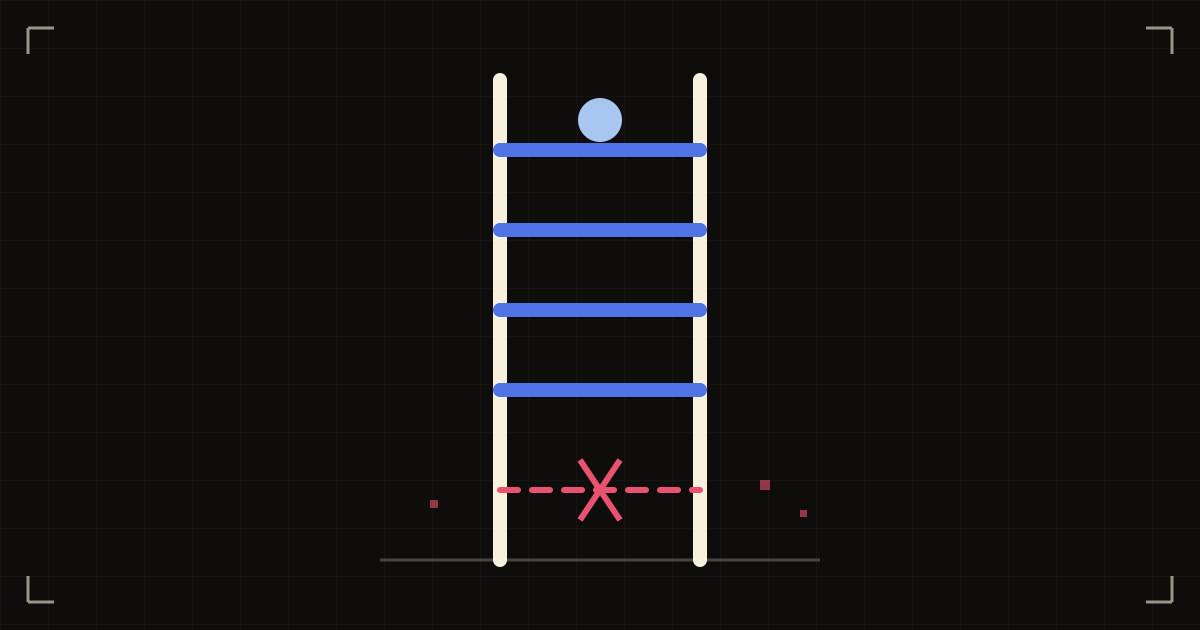
This is the part that worries me. A company can run for a few years on the seniors it already has, letting the model do the junior work and feeling efficient about it. But seniors retire, move, and leave. The pipeline that replaces them ran through exactly the junior work that just got automated. Cut the bottom rung off the ladder and the ladder still looks fine for a while, right up until you need someone to climb it and discover nobody learned how.
The instinct does not come from watching
Someone always says the juniors will still learn, they will just learn by reviewing the model’s output instead of producing it themselves. I do not buy it, and I have watched enough people develop expertise to be skeptical. Reviewing a finished, confident, fluent answer is a fundamentally weaker teacher than building the answer yourself and getting it wrong. The struggle is the lesson. Reading a correct answer feels like understanding and rarely is.
You can see this in any skill. You do not learn to write by reading good writing alone. You do not learn to diagnose by watching someone else diagnose. The knowledge that matters, the kind that fires as instinct on the case that does not fit the pattern, is built by doing the work under conditions where being wrong has small consequences. The junior job provided exactly those conditions. A model doing the junior work, reviewed by a senior, removes them.
This is a collective action problem
The trap is that the incentives all point the wrong way for any single company. It is genuinely cheaper, this quarter, to automate the junior work. The cost of the missing seniors lands years later and lands partly on other companies, because people move. So every individual firm has a reason to cut junior roles and no individual firm bears the full cost of the eroded pipeline. That is the shape of a problem that markets handle badly, and it is the shape this one has.
I do not have a clean fix, and I distrust anyone who claims one. But I am fairly sure the first step is naming the trade honestly, because right now most companies think they are just getting more efficient. They are also disinvesting in the future supply of the expertise they depend on, and they should at least know they are doing it.
What a thoughtful company can do
If you employ junior people, resist the urge to automate away the work that develops them just because you can. Keep some of the formative work flowing through humans, not as charity but as the cost of having capable seniors in five years. Use the model to remove the genuinely tedious parts and to give juniors faster feedback, rather than to remove the juniors. Treat the development of your own people as a thing worth protecting, because the alternative is renting expertise forever from a market that is quietly running its own pipeline dry.
The AI that does junior work well is a real capability and a real saving. The question is whether we spend that saving on short term efficiency or reinvest some of it in the people who will have to supervise these systems when the current seniors are gone. Right now we are mostly spending it, and the bill comes due on a timeline long enough that the people making the decision will not be the ones who pay it. That is exactly the kind of decision worth slowing down to look at.