writing4 min read
Raising the Floor
The most quietly profound thing AI does is raise the minimum quality of work that an ordinary person or a small organization can produce. That floor matters more than the ceiling almost everyone is arguing about.
by faisal kurdi
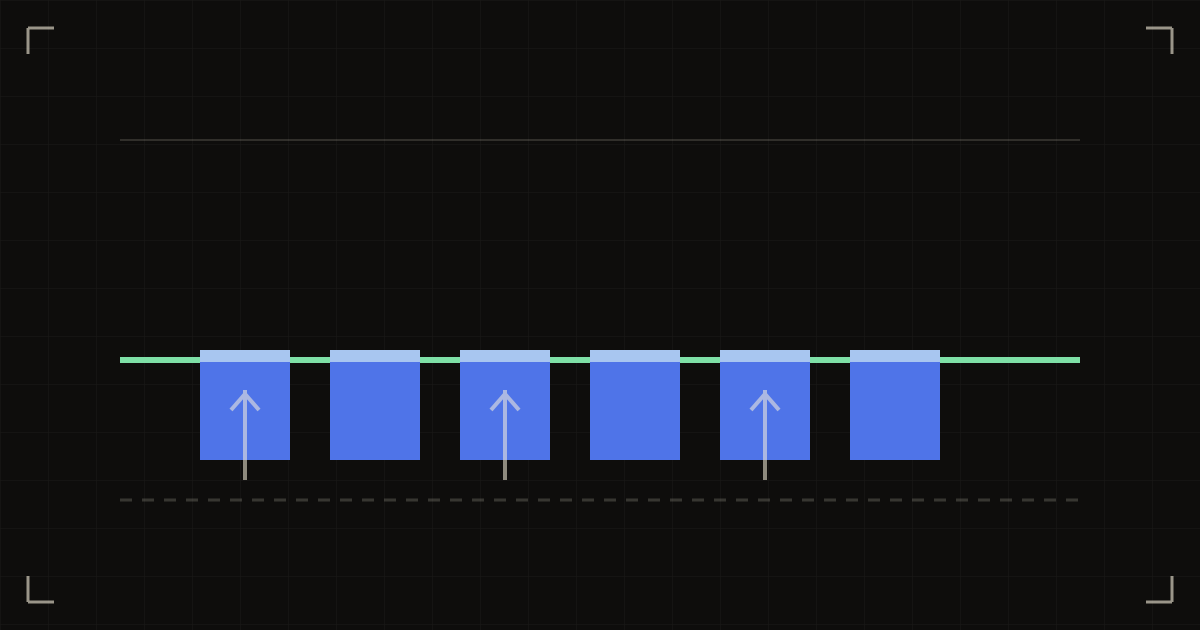
Most of the argument about AI is about the ceiling. Will it match the best human, will it exceed them, what happens when the smartest output in the room comes from a machine. It is an interesting argument and I think it is mostly a distraction from where the real change is happening. The thing AI is actually doing, right now, all over the economy, is raising the floor. It lifts the minimum quality of work that an ordinary person, with no special training and no big budget, can put into the world.
I find the floor far more interesting than the ceiling, because the floor is where most people live. The number of people producing genuinely best in class work was always tiny and AI does not change much for them. The number of people producing rough, error prone, just barely adequate work because they lack the time or the training or the support is enormous, and for them a tool that quietly lifts everything up to competent is transformative in a way the ceiling debate completely misses.
Competent is a bigger deal than excellent
Consider what raising the floor actually means in practice. The small business owner who wrote clumsy, error filled customer emails because writing was never their strength now sends clear ones. The non native speaker who was held back by language rather than ability now communicates at the level of their actual competence. The overwhelmed clinic that processed intake inconsistently because they were short staffed now processes it consistently. None of these became excellent. All of them became reliably competent, and reliable competence is the thing most work actually requires.
We badly overvalue excellence and undervalue consistency. Most of the friction in the economy is not a shortage of brilliant work. It is the steady drag of work that is a little bit wrong, a little bit late, a little bit unclear, produced by people who are capable but stretched too thin to do better. A tool that closes that gap, that takes the merely adequate up to dependable, removes more total friction than any number of brilliant outputs at the top.
Where I have seen the floor rise
When we built the AI interface for Chronicle, part of what it did was let people work with their data who could not have done it before without a specialist. The floor for who could ask a useful question of the system dropped from someone with technical skill to anyone with a real question. That is the floor rising, and the effect was not that the experts got replaced. It was that a much larger group of people could now do something that used to require expertise they did not have.
I see the same thing in the smaller automations. The team that could never afford a dedicated writer now has competent drafts. The operation that could never staff a full back office now has one that mostly runs itself. None of this is about reaching some new height of capability. It is about a much wider group of people and organizations clearing the bar of competent, and competent is where most value gets created.
The honest limits of a higher floor
I want to be careful, because a higher floor is not an unqualified good and the optimistic version of this gets oversold too. A floor that is competent can also be uniform, and uniformity has a cost. When everyone’s writing is lifted to the same fluent baseline, the floor rises and the texture flattens, and we lose some of the variety that came from people working at the edge of their actual ability. The competent draft the model produces is competent in a slightly generic way, and a world of generically competent output is better than a world of incompetent output but it is not the same as a world of distinctive work.
There is also a real risk that a higher floor becomes a lower ceiling for the people who never push past it. If competent is available for free, the incentive to develop past competent weakens, and some people who would have become excellent will settle at the floor the tool provides. That is a genuine loss and worth naming, even while the floor rising is on balance a good thing.
Why this is the part to be hopeful about
Weighed honestly, raising the floor is the most democratic thing this technology does. The ceiling has always belonged to a small number of people with rare talent and the resources to develop it, and AI does not really change who gets to live up there. The floor belongs to everyone, and lifting it lifts the people who had the least access to the training, the support, and the time that competent work used to require.
So while everyone argues about whether the machine will out think the best of us, I keep my attention on the floor, because that is where the change is actually landing and that is where it reaches the most people. A small business that can now do its own competent work, a person whose ability is no longer trapped behind a skill they lacked, a small team that can clear a bar that used to need a budget they did not have. That is not the dramatic future. It is the better one, and it is already here for anyone who reaches for it.